Top Columbia SC Locksmith Service Team
Local locksmith team
Jun 12, 2026 13 min read

If your front door has started fighting back — sticking mid-turn, rattling when it should be solid, or making a grinding noise that wasn't there six months ago — your mortise lock is trying to tell you something. Mortise locks are the heavy-duty, pocket-style locks built into the door itself, and they're common on older Columbia homes, historic properties near the Vista district, and commercial storefronts along Main Street. They're built to last, but they're not immune to wear.
The good news is that a mortise lock rarely fails without warning. Catch the right signs early and a professional repair visit is straightforward. Ignore them and you're looking at a lock that seizes up at the worst possible moment — a late night, a rainstorm, or right before a family gathering. This guide walks Columbia homeowners through five specific warning signs, what's actually happening inside the lock body, and when it's time to call a skilled locksmith before the lock makes that decision for you.
## What Is a Mortise Lock and Why Does It Fail Differently Than Other Locks?
A mortise lock is a complete lock mechanism — latch, deadbolt, and sometimes a knob or lever spindle — housed inside a rectangular pocket (the mortise) cut into the door edge. Unlike a cylindrical borehole lock you'd swap out in minutes, a mortise lock set is an integrated system with more moving parts: a cam, a follower, springs, a case, and a separate mortise lock cylinder that the key turns. Premium hardware lines like Baldwin mortise lock sets and Corbin Russwin mortise lock systems are built to commercial-grade tolerances, but that complexity also means more components that can wear, corrode, or shift out of alignment over time.
Exterior door applications are especially demanding. A mortise lock set exterior door installation faces temperature swings, humidity, UV exposure, and the mechanical stress of dozens of turns every day. Columbia's humid summers accelerate corrosion inside the case, while the freeze-thaw cycles we occasionally see in January can cause door frames to swell and bind the lock body. The failure modes for a mortise lock are distinct from a simple door knob lock or a deadbolt — which is exactly why the warning signs are worth knowing.
## Sign 1 — The Key Turns Hard or Sticks Partway Through the Rotation
Healthy mortise lock cylinders turn smoothly from stop to stop with light finger pressure. If you're now white-knuckling the key or feeling it catch at a specific point in the rotation, that's a mortise lock cylinder problem — not a key problem. The most common causes are worn driver pins inside the cylinder, dried-out or contaminated lubricant in the plug, or a cylinder that has shifted slightly inside the lock case and is now binding against the cam it's supposed to drive.
The fix is rarely just a squirt of WD-40. Oil-based sprays attract grit, and inside a mortise case that grit becomes an abrasive paste. A professional will remove the cylinder, clean and inspect the pin stacks, lubricate with the correct dry or Teflon-based product, and re-align the cylinder to the cam. If the plug or shell shows measurable wear, rekeying or replacing just the cylinder is usually enough — the case itself may be perfectly serviceable.
## Sign 2 — The Door Knob or Lever Feels Loose, Spins, or Doesn't Spring Back
A loose door knob on a mortise lock isn't a cosmetic nuisance — it's a structural warning. Inside the lock case, a square spindle runs through the follower (a cam-like piece that actuates the latch). When the set screw holding the knob or lever to the spindle backs out, or when the follower spring breaks, the knob will spin freely without retracting the latch. At that point the door may look closed but will swing open with a push, or it may trap you inside because the knob no longer engages anything.
On a Baldwin mortise lock or similar quality hardware, the spindle and follower are precision-machined parts that don't often break — but the set screw backing out is extremely common, especially on doors with heavy foot traffic or kids who hang on the handle. A trained locksmith can tighten and thread-lock the set screw, replace a broken follower spring, or install a new spindle if it's stripped — usually in under an hour on site. Don't wait until the knob comes off entirely in your hand.
## Sign 3 — Grinding or Scraping Sounds When Locking or Unlocking
A grinding noise is the sound of metal removing metal. Inside a mortise lock case, grinding typically means the cam is dragging against the inside of the case wall, a worn latch bolt is scraping the strike plate, or debris has worked its way into the mechanism. On exterior doors, fine grit and oxidation can build up inside the case over months and create a grinding feedback every time the lock cycles. Left alone, this metal-on-metal contact accelerates wear on the cam, the follower, and the bolt itself — components that are significantly more expensive to replace than to maintain.
If the grinding is accompanied by the latch bolt not fully extending or retracting, the lock is already partway to failure. A qualified locksmith will disassemble the case, clear the debris, assess wear on the cam and bolt, and either refurbish the mechanism or advise on a case replacement. For homeowners with a Corbin Russwin mortise lock or similar commercial-grade hardware, individual case parts are often available, making a targeted repair practical rather than a full replacement.
## Sign 4 — The Latch Bolt Doesn't Retract Fully or the Deadbolt Drags
Try this: with the door open, push the latch bolt in by hand and let it go. It should snap back immediately and decisively. If it crawls back, stops short, or requires a second push, the latch spring inside the mortise case is weakening. Now throw the deadbolt by hand — it should slide out and retract without resistance. Drag or hesitation on the deadbolt usually means the bolt itself has corroded, the strike plate hole is misaligned by even a millimeter (common after a Columbia summer when wood doors swell), or the lock case has shifted in the mortise pocket.
A dragging deadbolt is often the last warning before a complete lock-out scenario — the bolt extends but won't retract, and suddenly you can't open the door from either side. If you notice this sign, call a professional locksmith before that moment arrives. An experienced locksmith can adjust strike plate position, re-square the case in the mortise, or replace the latch and bolt assembly without disturbing the rest of the door. If you're in the Columbia area and noticing this today, don't put it off — call (704) 850-6756 and describe what you're seeing. We'll give you an honest assessment over the phone.
## Sign 5 — Visible Rust, Loose Face Plate, or a Case That Moves When You Push the Door
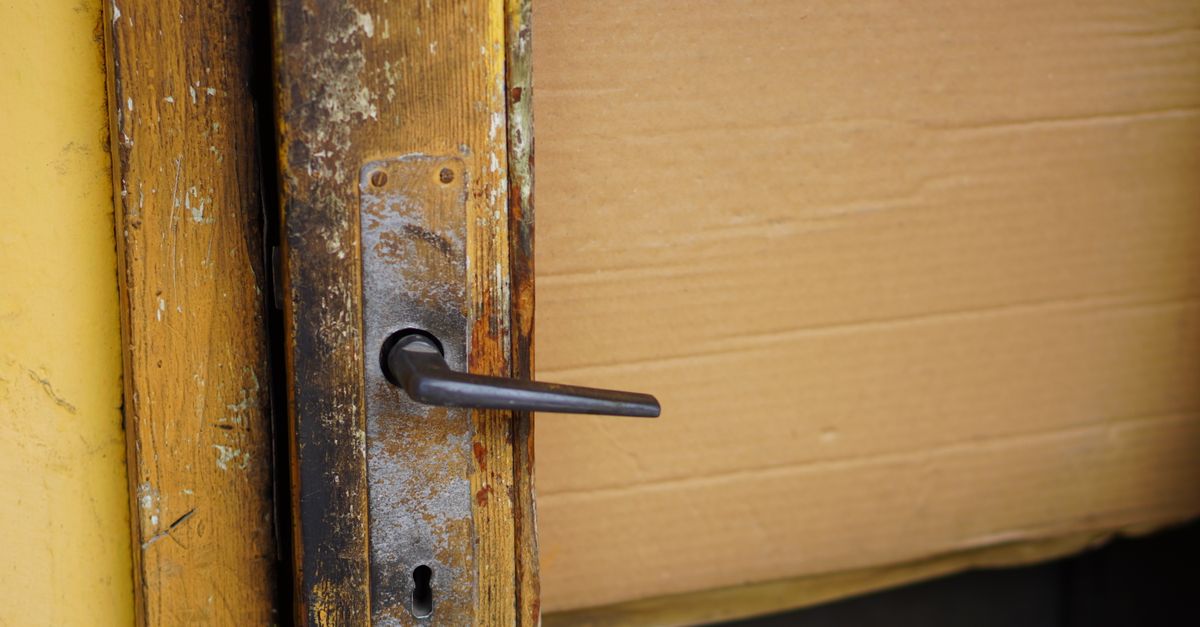
The face plate — the narrow metal strip you see on the door edge — should sit perfectly flush and be rock-solid. If it's lifting at a corner, showing rust bleed onto the door edge, or if you can feel the entire lock case shift when you push firmly on the door, the mortise pocket itself has deteriorated. This happens most often on older Columbia homes with original wood doors that have experienced decades of moisture cycling, or on exterior doors where weather stripping has failed and allowed water to reach the lock pocket.
Visible rust on the face plate is a signal that the corrosion has already moved inside the case. At that stage, a full mortise lock set replacement is often the more practical recommendation — not because the locksmith wants to upsell you, but because a corroded case has compromised springs, bolts, and follower surfaces that can't be fully restored. When our team inspects the lock, we'll show you exactly what we find and confirm your options and exact price before any work begins. Factors that shape the final quote include the lock hardware selected, whether a new mortise lock set exterior door installation requires a new strike box, the time of service, and travel to your address.
## When to Call an Emergency Locksmith vs. Scheduling a Repair Visit
Not every warning sign is an emergency. Signs 1 through 3 — a stiff cylinder, a loose knob, or grinding — typically give you a window of days or weeks to schedule a non-urgent repair visit. Signs 4 and 5 are more urgent: a dragging deadbolt or a shifting case can cross into a lockout or a security failure without much notice, especially if you have a busy household.
That said, Columbia's crime landscape is a real consideration. Columbia, South Carolina has property crime rates that rank above many comparable mid-size cities, which means a lock that's compromised — even slightly — is a risk worth taking seriously. Our team operates as a 24/7 mobile locksmith across the Columbia area, including neighborhoods like Forest Acres, Harbison, and Shandon. Whether you need an emergency locksmith response right now or want to book a morning appointment to get ahead of a problem, the number is the same: (704) 850-6756. We answer every call around the clock.
## Our Mortise Lock Services and Everything Else We Handle for Columbia Homeowners
Top Columbia SC Locksmith is a fully mobile, 24/7 operation — no storefront required. Here is a specific look at what our skilled team handles across residential, commercial, and automotive work: mortise lock repair and case replacement, mortise lock cylinder rekey, Baldwin and Corbin Russwin hardware service, door knob lock replacement, deadbolt installation, smart mortise lock setup and troubleshooting, keypad lock programming, high-security lock upgrades, master key system design, commercial locksmith services for offices and retail spaces, panic bar and exit device service, access control system installation, safe opening and combination changes, residential lockout response, commercial lockout response, automotive lockout service, transponder key cutting and programming, key fob programming (including situations where you no longer have the original fob), broken key extraction from locks and ignitions, ignition cylinder repair, car key duplication, door frame and strike plate reinforcement, window lock installation, sliding door lock service, mailbox lock replacement, and storage unit lock service. If it locks, we service it.
We should also note: we are insured, and every technician on our team is experienced and trained on the full range of hardware we service. We don't send generalists to complex mortise lock jobs — we send the right person with the right tools.
## A Note on Smart Mortise Locks and Kiosk Key Copies — What We Recommend Instead
Smart mortise lock technology has grown quickly, and we do install and service these units for homeowners who want app-based access or remote locking on their exterior doors. They solve some problems elegantly — no cylinder to wear out, no key to lose — but they introduce others: battery management, firmware updates, Wi-Fi dependency, and a lock-out mode that's uniquely frustrating if your phone dies.
On the key duplication side, we want to be straightforward with Columbia homeowners: kiosk-based key copy services at retail locations (the kind that photograph your key and mail you a copy) are convenient for basic house keys, but they are not equipped to handle mortise lock cylinders, high-security restricted keyways, transponder car keys, or access cards and fobs. For anything beyond a standard flat key, a professional locksmith visit gives you a cut key that's actually verified to work in your specific lock — not just a copy of the profile. We handle home keys, office keys, car keys, access cards, and fobs, all on-site at your location.
## What Locksmiths Actually Do — and Why It Matters for Your Mortise Lock
Historically, locksmiths were craftspeople who designed, built, and repaired lock mechanisms by hand — a trade that required metallurgy knowledge, precision filing, and a deep understanding of mechanical security. Today's professional locksmith carries that mechanical tradition forward with modern tooling: computerized key machines, plug followers, pinning trays, and diagnostic tools for electronic locks. When a locksmith works on your mortise lock, they're not just swapping a part — they're assessing the full door system: frame alignment, hinge condition, strike plate depth, cylinder wear, and case integrity.
That whole-system perspective is what separates a mortise lock repair that lasts five more years from one that fails again in six months. It's also why we encourage Columbia homeowners to call before a small problem becomes a lockout or a security gap. Our team is on the road across the Columbia area every day, and we'd rather spend twenty minutes fixing a stiff cylinder than respond to a 2 a.m. emergency call for the same door.
## Serving Columbia SC — Local Coverage Across the Metro Area
Our mobile team covers the full Columbia metro area — from the older bungalows and historic doors in Shandon and Elmwood Park to the newer construction in Irmo, Lexington, and Blythewood. We're familiar with the mix of door hardware you find in Columbia's housing stock: original Baldwin and Corbin Russwin mortise lock sets on mid-century homes, standard cylindrical locks on post-1980 builds, and the growing variety of smart locks and keypad systems on new construction. Wherever you are in the area, we come to you — fully equipped to diagnose and repair on the first visit in most cases.
Frequently asked questions
Can a locksmith open a locked door if my mortise lock has completely failed?+
Yes. A trained locksmith has non-destructive techniques to open most locked doors, including those with a failed mortise lock — and when non-destructive entry isn't possible, they'll explain your options before doing anything. We verify ownership at the door before any work begins. If you're locked out in the Columbia area, call (704) 850-6756 and we'll dispatch immediately.
What is a mortise lock, and is it worth repairing or should I just replace it?+
A mortise lock is a lock mechanism installed inside a pocket cut into the door edge, as opposed to a surface-mounted or borehole cylindrical lock. It typically includes a latch, a deadbolt, and a key cylinder in one integrated case. Whether to repair or replace depends on the condition of the case, the availability of parts for your specific hardware (Baldwin, Corbin Russwin, and other quality brands usually have good parts availability), and the extent of corrosion or wear. Our team will inspect and give you an honest, specific recommendation — and confirm the exact price before any work starts. Factors that affect the quote include the lock brand, parts needed, time of day, and travel distance.
Can a locksmith program a key fob without the original?+
In many cases, yes. Modern key fob programming often requires specific diagnostic equipment rather than the original fob — our team carries the tools to handle a wide range of vehicles. The feasibility depends on the vehicle make, model, and year, and whether the car's system requires a dealer-level connection for security pairing. We'll confirm what's possible for your specific vehicle before committing to the work, and give you an exact price up front.
How do I know if my mortise lock problem is a cylinder issue or a case issue?+
A cylinder issue usually shows up as a key that's hard to turn, sticks at a certain point, or feels gritty — the door otherwise functions normally. A case issue typically presents as a latch or deadbolt that moves sluggishly, doesn't retract fully, makes grinding noises, or has visible play in the face plate. Sometimes both are involved. The only reliable way to know is a hands-on inspection with the door open so a locksmith can cycle the mechanism manually and isolate which component is at fault. If you're in the Columbia area, we can assess on-site — call (704) 850-6756 to set that up any time, day or night.