Top Columbia SC Locksmith Service Team
Local locksmith team
Aug 7, 2026 10 min read
If you have ever stood at a self-serve key kiosk inside a big-box store on Two Notch Road and wondered whether it could handle your needs — or whether you actually needed a trained locksmith on-site — you are not alone. Columbia homeowners ask this question constantly, and the honest answer is: sometimes the kiosk is perfectly fine, and sometimes using one can cost you far more in the long run.
This guide breaks down exactly what a self-serve key-copy kiosk can and cannot do, when a professional mortise lock service or emergency locksmith visit is the smarter call, and how to tell the difference before you waste a trip. No guesswork, no upsells — just straight answers for Columbia, SC homeowners and drivers.
## What a Self-Serve Key Kiosk Actually Does — and Where It Stops
Self-serve key kiosks found in retail stores work by optically scanning a key you already have, then cutting a duplicate from a blank in their inventory. For a standard house key on a common Kwikset or Schlage keyway, this process works quickly and with reasonable accuracy. The kiosk scans the profile, selects a matching blank, and cuts a copy in under two minutes. If you need a simple spare for a family member or a backup to hide at a trusted neighbor's house on Devine Street, a kiosk copy of a basic pin-tumbler door knob lock key can do that job well enough. The technology behind these kiosks — sometimes marketed under names like 'Copy Any Key at Our Kiosk' or positioned as a way to 'visit our kiosk for home, office, car, access cards, and fobs' — has genuinely improved over the years.
Where the kiosk hits a hard wall is the moment your situation involves any meaningful complexity. Transponder car keys, high-security restricted keyways, keys that are already worn past a certain tolerance, electronic fobs, and keys associated with mortise lock cylinders all fall outside reliable kiosk territory. The kiosk cannot verify ownership of the property, re-key a lock, assess why a key is suddenly binding in a cylinder, or respond to your driveway at 2 a.m. Those needs belong to a trained, experienced locksmith — and understanding that line can save you a serious headache.
## Door Knob Lock, Mortise Lock, Deadbolt — Know What You Actually Have
Before you decide whether a kiosk or a locksmith visit is right, it helps to know the hardware on your doors. The most common residential lock is the cylindrical lock — what most people call a door knob lock or a door lever lock. The latch and the lock cylinder are all contained within the knob or lever assembly itself. What is the lock on a door knob called? The cylinder inside it is called a pin-tumbler cylinder, and the whole unit is a cylindrical lockset. These are the locks most likely to have a key that a kiosk can duplicate accurately, because the keyways are widely standardized.
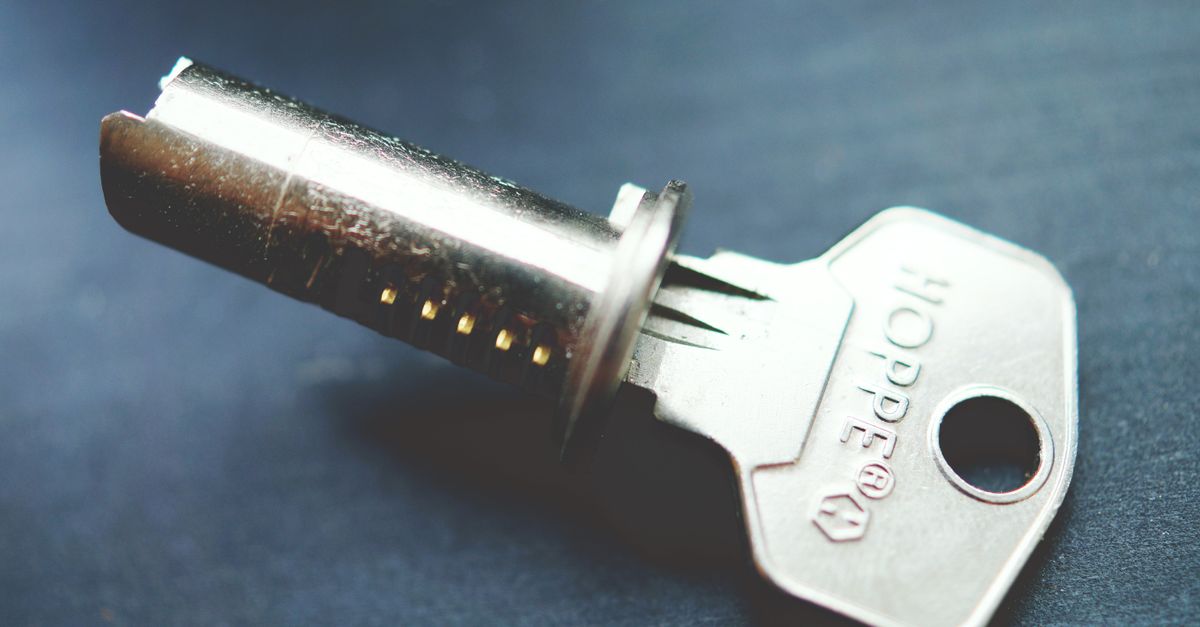
A mortise lock is an older and more robust design common in pre-1970s Columbia homes, historic bungalows in the Shandon and Earlewood neighborhoods, and most commercial doors. What is the mortise on a lock? It is a rectangular pocket — the mortise cavity — cut into the edge of the door, into which a full lock body (containing the latch, deadbolt, and cylinder all in one metal case) is installed flush. Mortise locks use a completely different key profile, often a flat 'bit' key or a specialized cylinder key, and the lock body itself is far more complex than a cylindrical lockset. Kiosks almost never carry the correct blanks for these keys, and even if a copy were cut, a worn mortise lock cylinder may need professional service rather than just a new key. Mortise lock installation, re-keying, and repair are core specialties for our team — it is genuinely skilled work that requires hands-on assessment of the door, the frame, and the existing hardware.
## When Columbia Homeowners Actually Need an Emergency Locksmith On-Site
There are situations where calling an experienced locksmith is not optional — it is the only practical path. A full residential or commercial lockout is the most obvious one. Can a locksmith open a locked door? Yes — a qualified professional can open a locked door through trained, legitimate methods that do not damage your lock or frame, after verifying your identity and right to access the property. We never provide step-by-step bypass instructions here or anywhere, because ownership verification and professional judgment are a critical part of that process. If you are locked out of your home near Five Points or your office off Forest Drive, the right move is to check for a spare key or an unlocked secondary entrance first — if neither option exists, call us.
Beyond lockouts, there is a long list of situations that demand professional eyes and hands rather than a kiosk visit: a mortise lock that has seized, a door knob lock that spins without engaging, a deadbolt that no longer aligns with the strike plate after a door has swollen or shifted, re-keying after a move or a lost key, key fob programming, and high-security lock upgrades. Can a locksmith program a key fob without the original? In many cases, yes — our team carries specialized equipment to program transponder keys and fobs for a wide range of vehicle makes even when no working key exists, though the specific process and parts needed vary by make and model. If any of these situations sound familiar, do not guess with a kiosk — call (704) 850-6756 and we will walk you through what is needed before we ever roll a truck.
## What a Professional Locksmith Covers That a Kiosk Never Will
It is worth being specific about the full scope of what a trained, insured mobile locksmith actually offers, because most people only think of us in a crisis. Our services include: residential lockouts, commercial lockouts, automotive lockouts, mortise lock installation and repair, mortise lock re-keying, cylindrical lockset installation, deadbolt installation and upgrade, door knob lock replacement, high-security lock installation, master key system design, key duplication for restricted keyways, transponder key cutting and programming, key fob programming, smart lock installation and troubleshooting, lock-grade door hardware consultation, door frame and strike plate reinforcement, padlock and storage unit lockouts, safe opening and combination changes, commercial door closer and hardware service, apartment and rental property re-keying after tenant turnover, eviction lockouts with proper documentation, access control system installation, cabinet and interior door lock service, garage door lock and handle service, and post-break-in lock assessment and emergency board-up coordination. That is a fundamentally different scope than any kiosk offers.
The factors that shape what any given job costs include the type of lock or vehicle involved, whether new parts are needed, the time of day, and travel distance to your location in the Columbia area. We confirm an exact up-front price with every caller before any work begins — no surprises on the invoice. What did locksmiths usually do throughout history? Historically, locksmiths were craftspeople who designed, built, and repaired every component of a lock by hand — a tradition of precision that still defines serious locksmith work today, even if the tools have changed dramatically. That craft background is why a mortise lock or a seized commercial lockset is routine for our team when it would be genuinely impossible for a kiosk machine.
## Making the Right Call for Your Columbia Home or Vehicle
Columbia, SC sees its share of property crime — the city's crime rate is a real concern that many residents keep in mind when evaluating their home security. That context matters when deciding whether to use a kiosk copy of an existing key or to invest in a professional re-key or high-security upgrade. A kiosk key copy does nothing to improve your security posture; it simply reproduces whatever level of security you already have. If your current locks are old, loose, or were last re-keyed before you moved in, a kiosk trip may actually create a false sense of security. A professional locksmith visit — especially one that includes a mortise lock assessment or a deadbolt upgrade — directly addresses the vulnerability. Is locksmithing a good side hustle? It is often asked because the field sounds approachable, but the reality is that professional locksmith work — especially mortise lock service, automotive programming, and commercial locksmith work — requires significant training, specialized tools, and ongoing investment in equipment. That is why experienced, insured mobile locksmiths exist and why the kiosk, for all its convenience, will never replace them for the jobs that actually matter.
Our team covers Columbia and the surrounding areas around the clock — from Lexington to Irmo, from the Vista to the neighborhoods east of Fort Jackson. Whether you need a quick re-key after a move, a mortise lock brought back to life in a century-old Shandon home, or an automotive key programmed in a parking lot, we are set up to handle it efficiently and professionally. The bottom line: use the kiosk for a simple spare on a standard key when you already have a working original. For everything else — any lockout, any mortise lock concern, any commercial locksmith need, any situation where security is genuinely on the line — call (704) 850-6756. We answer 24 hours a day, seven days a week, and we will give you a straight answer about what your situation actually requires before we do anything else.
Frequently asked questions
Can a locksmith open a locked door without damaging it?+
In most cases, yes. A trained, experienced locksmith uses professional techniques suited to the specific lock type — whether that is a standard door knob lock, a deadbolt, or a more complex mortise lock — that are designed to preserve the hardware. After verifying your identity and your right to access the property, our team works to open the door with the least invasive method available. Damage is generally only a factor when a lock has been mechanically compromised by a prior forced-entry attempt or has severely deteriorated over time, and we will always explain the situation before proceeding.
What is the difference between a mortise lock and a regular door knob lock?+
A door knob lock — also called a cylindrical lockset — houses everything inside the knob or lever itself and mounts to two holes drilled through the door face. A mortise lock is installed into a rectangular pocket (the mortise cavity) cut into the door edge, with a full metal lock body that contains the latch, deadbolt, and cylinder in one integrated unit. Mortise locks are more common in older Columbia homes and on commercial doors. They are more complex to service, re-key, and replace, which is why mortise lock work is a specialized skill set — not something a key kiosk can touch.
Can a locksmith program a key fob without the original key?+
Yes, in many situations our team can program a replacement transponder key or fob for your vehicle even when no working original exists. The specific process depends on the make, model, and year of your vehicle, as well as the type of immobilizer system it uses. Some vehicles require accessing the car's onboard computer directly, while others allow programming through the ignition. We carry professional-grade programming equipment for a wide range of vehicles. The exact parts needed and the time required vary, so we confirm all details and provide an up-front price before beginning any automotive key work.
How do I know if my Columbia home actually needs a re-key versus just a new key copy?+
A key copy from a kiosk is appropriate only when you have a working original key, the lock is functioning correctly, and you simply want a spare. A re-key — performed by a professional locksmith — is the right choice when you have moved into a new home (prior keyholders may still have copies), when a key has been lost or stolen, when your locks are showing wear or function inconsistently, or when you want to change who has access without buying all-new hardware. Re-keying changes the internal pins of the cylinder so that old keys no longer work, which is a meaningful security step that a kiosk copy cannot replicate.